
If you know exactly what to do and still cannot start, that is not laziness. It is how ADHD and executive function actually work. Here is a way through it.
One of the most frustrating parts of ADHD is the gap between knowing and doing. You know the task. You know it matters. You might even want to do it. And you still cannot get started. Then the guilt piles on, which makes starting even harder.
If that is your experience, the problem is not effort or character. It is initiation, one of the core executive functions that ADHD makes harder.
Why starting is the hard part
For an ADHD brain, motivation does not run on importance the way it does for most people. It runs on interest, urgency, novelty, and challenge. A task that is important but boring, and far off in time, gives the brain almost nothing to grab onto. So it sits there. The pressure builds. The avoidance gets stronger. And every hour you do not start, the task quietly gets heavier.
That is the loop most men with ADHD know far too well.
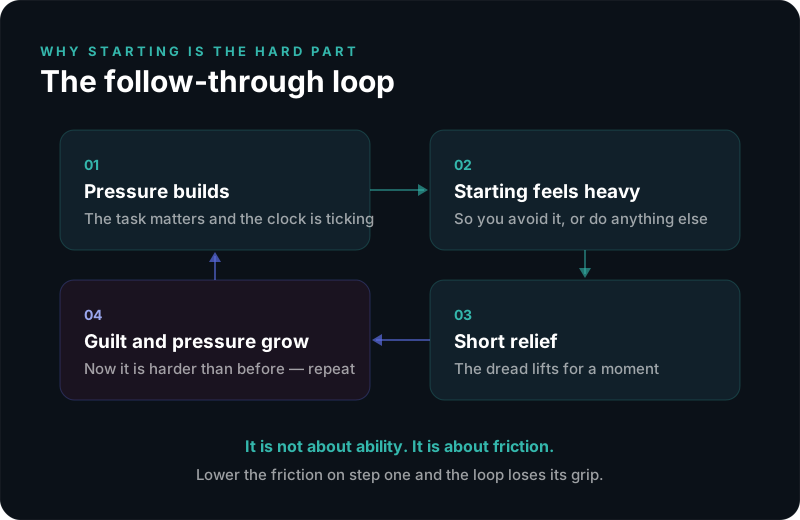
Notice what the loop is really about. It is not that you cannot do the task. You have done harder things. It is that the first step carries too much friction and too little pull, so your brain keeps choosing relief over starting. Understand that, and the fix gets a lot more obvious.
Pushing harder is not the answer
Willpower is not the missing ingredient. If white-knuckling worked, you would have solved this years ago. What works is structure: building the conditions that make starting easier, so your effort goes into the task instead of into the fight to begin it.
What actually helps you start
These are small, practical, and built for how the ADHD brain actually works:
- Shrink the first step until it feels almost too easy. Not "do the taxes." Open the folder. Starting beats planning every time.
- Add urgency on purpose. A short timer, or a body double (someone working alongside you, even on a call) creates the pressure the task did not have on its own.
- Lower the cost of starting. Set things up the night before. The fewer steps between you and the task, the more likely you begin.
- Work with your energy, not against it. Put the hard start in your best window, not whenever you happen to remember.
- Make finishing visible. A simple done list gives the brain the hit of completion it is wired to chase.
None of this requires becoming a different person. It requires a system that handles the parts your brain finds hard.
What about the shame?
For a lot of men, the hardest part of ADHD is not the missed deadlines. It is the story underneath them: I should be able to do this. What is wrong with me? Years of that builds a quiet shame that makes every unstarted task feel like more evidence. It is not evidence. It is a brain wired for interest and urgency running in a world built around importance and routine. Naming that honestly tends to take a surprising amount of weight off.
A note on medication
Therapy and medication do different jobs. Medication can turn the volume down on the noise; therapy and structure build the systems and self-trust that make follow through stick. Many men use both, some use one. If medication is part of your picture, the work here can run alongside it.
If follow through is a constant battle, my ADHD support is built around exactly this. And if the pressure of it all has tipped into stress and burnout, or shows up as anxiety, we can work on those together. They often travel as a set.
This article is general information, not a substitute for individual care. If you want help building a system that sticks, book a free consultation.