
Understand therapy receipts, plan eligibility and reimbursement before booking. Learn how insurance benefits differ from Employee Assistance Program access.
If cost is affecting your decision to start therapy, checking your actual benefits can help. Coverage depends on your plan and the provider you choose; having insurance does not automatically mean every session is covered.
Here is what to check before booking virtual psychotherapy in Ontario.
First, the OHIP question
Resolve's private psychotherapy sessions are not billed to OHIP. Publicly funded services are a separate option. Ontario's mental health services guide includes the free Ontario Structured Psychotherapy program for eligible adults. Check the regional program's suitability, referral process and availability.
For private sessions, ask whether your extended health benefits or health spending account covers the provider and service before you incur a fee.
How reimbursement actually works
At Resolve, you pay for the session and receive a receipt. I do not bill your insurer directly. If your plan confirms coverage, the process is:
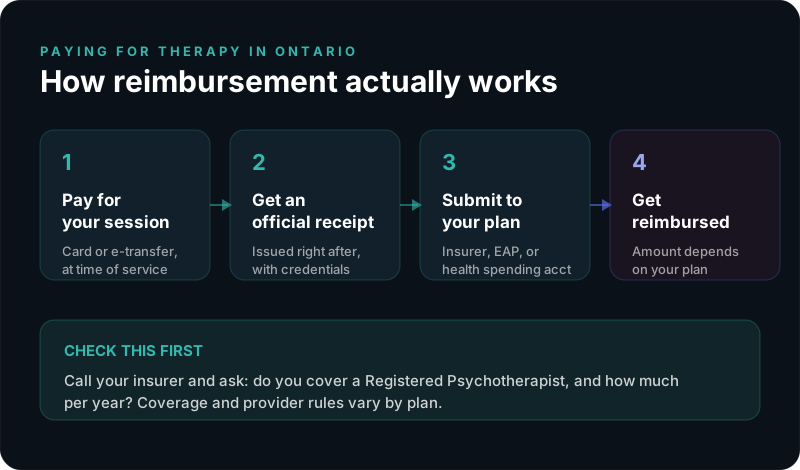
- You pay for your session at the time of service, by card or e-transfer.
- You get an official receipt right after, with the provider's name and credentials on it.
- You submit the receipt to your insurer or eligible health spending account using its required process.
- Your plan assesses the claim and reimburses the eligible amount, subject to its conditions and remaining limits.
You remain responsible for the session fee if a claim is declined. An Employee Assistance Program (EAP) may use a different access and payment process, described below.
Questions to ask your plan before booking
Contact your plan using the details on your benefits card and ask:
- Do you cover a Registered Psychotherapist (Qualifying)? Ask about the provider's exact title and whether virtual sessions are eligible.
- What will you reimburse? Confirm the percentage, any limit per session, deductible and remaining annual amount. Ask whether that amount is shared with other services.
- Do I need a referral or approval first? Confirm any requirements before booking.
- How do I submit a claim? Ask what the receipt must include, what other information is required and how long assessment normally takes.
- Who can access my claim information? Ask the insurer or program about its own privacy practices rather than assuming what an employer can see.
Keep the coverage explanation or reference number so you can check it if a claim is assessed differently. The plan administrator decides eligibility and reimbursement.
Check your remaining benefit and the provider's eligibility before paying for a session. A quoted annual maximum is not a promise that every claim will be paid in full.
Where the money goes
At Resolve, the standard fee is $150 for a 50 minute virtual session, with an official receipt provided. The pricing page explains payment and the free consultation. The cost guide includes session-budget examples with explicit reimbursement assumptions.
EAP access is different from an insurance claim
An Employee Assistance Program may arrange counselling through its own provider network. Contact the program before booking privately to confirm its referral or authorization process, eligible providers, session limits and any fees. Do not assume an EAP will reimburse a Resolve receipt.
For example, Canada Life's Contact EAP guide distinguishes counselling supplied through the program from referred community counselling that the EAP does not cover. This is one program's approach; your own program's terms govern.
If cost is a barrier
Sometimes the coverage is not there, or it runs out. A few things worth knowing:
- Health spending accounts (HSAs): ask your plan whether this provider and service are eligible and what balance remains.
- Employee assistance programs (EAPs): check access directly with the program before booking an outside provider.
- Public or community services: use Ontario's guide above or 211 Ontario to explore services and ask about eligibility and fees.
- Ask about current options: you can raise affordability during the consultation. Reduced fees or a particular appointment are not guaranteed.
You can ask about costs before deciding whether to begin. There is no obligation to continue after the consultation.
If you want to ask about pricing, receipts, or how the logistics work before committing to anything, you can send a quick question or book a free consultation. The consultation is free regardless of coverage.
This article is general information about how coverage commonly works in Ontario, not financial or insurance advice. Your own plan is the final word, so confirm the details with your provider.