
New to therapy? Read about a first consultation, what sessions can involve and questions to ask when considering online therapy.
If you are considering therapy for the first time, not knowing what to expect can make the decision harder. You might picture a couch, a stranger asking how you feel, and a lot of talking without a clear purpose.
That is not how this works. Here is what actually happens, start to finish, so you can decide with the real picture instead of the stereotype.
You do not need previous experience with therapy
You can start therapy without having seen a therapist before. You do not need the right words. You do not need your story organised. You do not need to have hit rock bottom to qualify. "Something is off and I want to deal with it" is a completely valid reason to start.
Step one: a free consultation, not a commitment
The first step is a free 30 minute call. It is a conversation, not a sales pitch and not a session. You say what is going on in plain terms, I tell you honestly whether this is something I can help with, and you ask anything you want. If it is not a fit, I will say so and we can discuss other options. There is zero obligation to book anything after it.
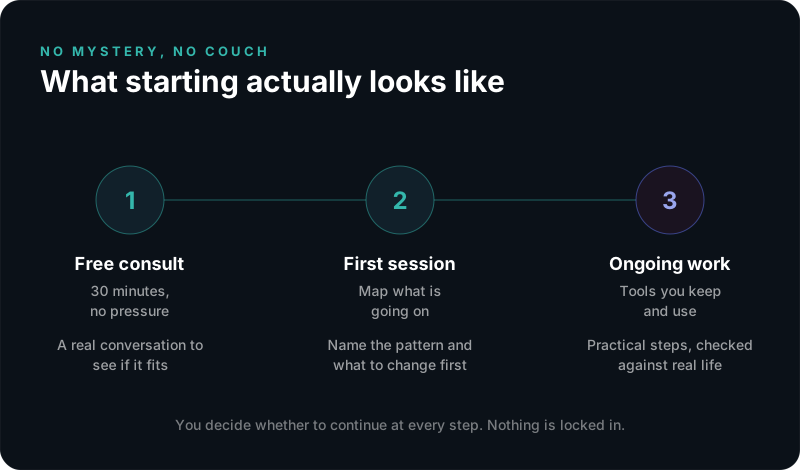
Step two: the first real session
If you decide to go ahead, the first session is about getting the lay of the land. We talk through what is happening now, what you want to be different, and what has already been weighing on you. We begin identifying patterns and possible next steps together. It may take more than one session to get a clear picture.
You are in control of pace the whole time. You decide what you get into and what waits. Nothing gets pried out of you.
Step three: the ongoing work
From there, sessions stay practical. We work on the pattern, build skills you can actually use between sessions, and check what is changing in your real life. The work is direct: less "tell me about your childhood" for its own sake, more "here is what keeps happening, here is what we do about it." If something is not working, we adjust. You can ask why we are using an approach and how it connects to your goals.
"Does online therapy actually work?"
A 2024 systematic review found moderate certainty evidence of little to no difference in effectiveness between cognitive behavioural therapy (CBT) delivered in person and remotely with therapist guidance. The remote formats included more than live video sessions. That finding is about CBT in the studies reviewed, not a guarantee about every kind of online therapy or your individual outcome.
Virtual sessions remove the commute, but privacy, a reliable connection and a suitable setting still matter. Choose a quiet, private place where you can speak without being overheard and give the session your attention. If that is difficult, raise it during the consultation so we can discuss whether virtual care is a good fit. All sessions at Resolve are virtual, across Ontario, on a secure platform. A secure platform does not remove every privacy risk; CRPO explains the precautions and limits of electronic practice.
You do not have to be in crisis to ask about therapy. You can start by talking about something you want help with.
The honest concerns men raise
- "I'm not good at talking about feelings." You do not need to arrive with the right words. We work through patterns, decisions, and practical steps, and deal with emotions in a grounded way, not a performative one.
- "Will it stay private?" Your personal health information is protected by Ontario privacy law, including PHIPA. I do not share it without your informed consent, or that of an authorized representative, unless disclosure is permitted or required by law. I explain these limits before therapy begins; ask about anything that concerns you, including family, employers or insurance. CRPO describes confidentiality and its limits.
- "How long does it take?" It depends on what you are carrying and what you want. We check progress regularly and keep it tied to what is actually changing, not open-ended for its own sake.
- "What does it cost?" Sessions are a flat fee and you get a receipt for insurance reimbursement. The details are on the pricing page.
How to start
If the not-knowing was the thing holding you back, that part is handled now. The next step is small on purpose: a free 30 minute conversation. You can book a consultation here, or read more about how I work first if you would rather size me up before you reach out. Either is fine.
This article is general information, not a substitute for individual care. If you are in crisis, call 911 or the 9-8-8 Suicide Crisis Helpline.