
You moved on, but your body did not get the memo. Here is why old experiences still drive reactions years later, and how trauma work actually helps men.
A lot of men assume trauma is only for the extreme cases: combat, a serious accident, something with a clear headline. So when their own reactions do not add up, they do not connect it to anything. They just figure something is wrong with them.
Here is the part that gets missed: trauma is not really about the event. It is about what the event did to your nervous system, and whether that system ever got to stand down.
Your body keeps score even when your mind has moved on
You can know, logically, that something is over. You can have "dealt with it" and moved forward. And your body can still react as if the threat is live. A situation hits harder than it should, your sleep never feels fully safe, certain people or places put you on edge for no reason you can name.
That is not weakness and it is not you being dramatic. It is a nervous system that learned to survive and never fully got the all-clear.
Trauma is not a sign you are broken. It is a system that learned to protect you and never got told the danger had passed.
The window of tolerance
There is a simple way to picture this. Your nervous system has a comfortable range where you can think clearly, stay present, and handle what comes. Therapists call it the window of tolerance.
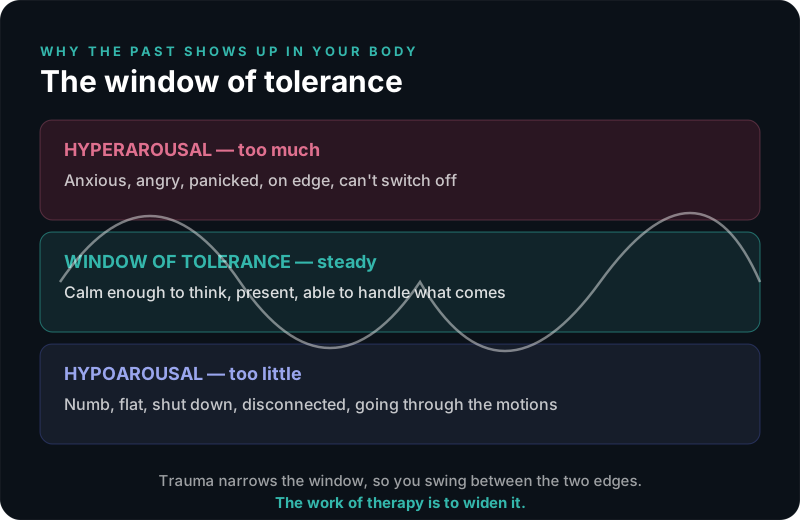
When you are inside the window, you are steady. When something pushes you out the top, you go into hyperarousal: anxious, angry, panicked, wired, unable to switch off. When something pushes you out the bottom, you drop into hypoarousal: numb, flat, shut down, disconnected, going through the motions.
Trauma narrows that window. The range where you feel okay gets smaller, so it takes less to knock you out of it, and you end up swinging between the two edges: wired one moment, shut down the next. If that pattern sounds familiar, the window of tolerance is a useful way to make sense of what might be happening under the hood.
How it tends to show up in men
- Reactions that are bigger than the situation calls for
- Going numb or checking out when things get intense
- Trouble relaxing, even when nothing is wrong
- Avoiding people, places, or conversations that stir it up
- Physical stuff (tension, gut issues, poor sleep) with no clear medical cause
- Shame about not being "over it" by now
Why talking it to death is not the goal
A common fear is that trauma therapy means reliving the worst thing in detail, over and over. That is not how good trauma work goes, and pushing into the story too fast can do more harm than good.
The order matters. You build stability and safety first: the skills to stay inside your window. Only from there do you carefully work with what is underneath, at a pace you set, and never past what your system can handle. A lot of the work is body-aware, because the charge is stored in the body, not just the memory. You do not have to hand over the whole story for it to help.
What progress actually looks like
Not erasing the past. You cannot, and that is not the target. The realistic, meaningful goal is a wider window: more situations you can stay present for, faster recovery when you do get knocked out of range, and old triggers that lose their grip on your day. Steady, paced progress toward a life the past does not run.
You stay in control the whole way. Nothing gets forced.
If this is landing, trauma therapy for men is built around exactly this approach: safety and pacing first, your pace throughout. Because trauma and anxiety live on the same system, we often work on both. You can book a free consultation to talk through whether it fits, with no pressure to go any further than you want.
This article is general information, not a substitute for individual care. If you are in crisis, call 911 or the 9-8-8 Suicide Crisis Helpline.